Let’s write your book, shall we?
But first, we know you have questions.

We admit a limited number of writers (including you!) on a rolling basis so that our small team of industry professionals can give you hands-on attention. Short version, you get:
Weekly, live instruction from our small faculty who will get to know you and your book (they are not guest lecturers, and these are not webinars—we want to talk back and forth with you!)
Customized onboarding to help you dive in no matter where you are when you start (writing, revising, or, re-watching Love is Blind: Germany)
1-on-1 calls & critiques with editors from major publishing houses (not peer feedback—you won't be reading anyone’s pages)
Expert feedback on your book’s pitch from our in-house literary agent (so you can land your dream publisher)
Most of our members have jobs and children.

Based on 2026 survey data
83% of our members have jobs and kids
94% of writers finish their book in 12 months
80+% of those querying receive full manuscript requests


23 and counting have gotten book deals within 3 years of graduating



The Book Incubator™ is built on the idea that good writing can be taught, and even authors who haven’t written a creative word in decades can craft a publishable book—indeed, a great book—with the right guidance (not peer feedback), the right process (not hundreds of hours of videos to watch or dozens of hours of “workshopping”), and the right editorial (not Frank the lawyer in your Novel 101 class).
It’s also true that not everyone can or will write a book. It takes work, persistence, and hunger—both to improve, and to succeed.
The 5 things that make us different:
1. Mary’s background in education
Mary isn’t “just” an author. She spent a decade in curriculum design, turning complex subjects into digestible lessons for a major education company. In other words, she’s an educator at heart, and you can tell. The Book Incubator pedagogy is clear and succinct, not the haphazard thoughts of a scattered artist struggling to identify teaching points.
2. Rufi’s teaching
In the six years Mary was taking random writing classes while working on her first novel, there was one writing class she found helpful: the one taught by Rufi Thorpe. Rufi was, and remains, the best creative writing teacher Mary ever had….which is why she brought in Rufi to teach alongside her in The Book Incubator before she was a famous novelist (“I liked the band before it was cool!”).
3. How feedback works
No peer feedback here—whether you’ve never taken a creative writing class or have an MFA, the former acquisitions editor at Penguin Random House is here to brainstorm your book with the same enthusiasm and insight.
The structure of our feedback system is also completely unique. We’ve designed a structure of feedback for members that is based on years of experience ourselves as authors. It is different than anything we’ve ever seen anywhere else. You can read more about it here.
4. It’s comprehensive, but not burdensome
This is the last writing program you’ll ever need—because you’ll get it done (this is where we remind you yet again that 94% of our members finish their books).
At the same time, it’s built to save you time, not take up more of it. "We help you fit writing into your already busy life" and "take what excites you, discard what gives you cold sweats.” You will not be asked to read other people’s work. You’ll only spend time on your own.
5. All types of books are welcome
Unlike traditional MFA programs, we reject a hierarchy of genres and believe that great books can be commercial, literary, and everything in between. Writers in all genres are part of our community. (And you don’t have to be a celebrity to write a publishable memoir.)

Want more?
Listen to Mary and Rufi talk on Mary’s podcast about their teaching and philosophy:
Boring Doesn't Mean Good
Writing Isn't a Country Club or Mensa
You Can’t Fix Your Book to Greatness
Not guest lectures or distant "founders" who show up for an occasional webinar-style Q&A.
We'll get to know you and your book—face to face, most weeks of the year.


Founder of The Book incubator™
Writing Instructor
3x Novelist with HarperCollins
Mary Adkins is founder of The Book Incubator™ and author of the novels When You Read This (an Indie Next Pick and “Best Book of 2019” by Good Housekeeping), Privilege (a Today.com “Best Summer Read”), and Palm Beach (a New York Post “Best Book of 2021” and described by the Associated Press as “like a sandy beach, equal parts beautiful and uncomfortable”). Her memoir, You Might Feel a Little Pressure, was published in March 2025 by Third Rail Press, an independent press she co-founded that won the Independent Book Publishing Association's Silver Medal for Best First Book in 2025. A graduate of Yale Law School, mom, and reality TV fan, she spent a decade as a curriculum designer for a small education company before founding The Book Incubator and is passionate about turning complex subjects into simple ideas.
In Mary’s Words…
“I spent six years writing and re-writing my first novel, trying to cater to the tastes of peers in my writing classes who kept writing comments in the margins like 'where's the inciting incident?' It's no wonder I drove myself into a depression—and still didn't have a publishable draft. When I finally stopped subjecting myself to these traditional writing workshops and wrote the book that was in my heart, I got an agent within six weeks. Within three years I’d sold three novels and realized that those old writing classes, where everyone who had never published a novel just swapped pages and gave each other feedback? They were like a bunch of student pilots trying to teach each other to fly by sitting in a circle and tossing out guesses. The Book Incubator™ is the program I wish had existed in those years. Better and faster than an MFA, and, I like to think, more fun.”
"The experience and expertise Mary offers have been incredibly insightful and valuable. She’s also just a really cool person who cares about the people in her program."
Denise

Program Revision Instructor
PEN/Faulkner & Kirkus Prize Finalist
Author of Margo's Got Money Troubles, now an Emmy-winning Apple TV series
Rufi Thorpe is author of the novels Margo’s Got Money Troubles (finalist for the 2024 Kirkus Prize for Fiction, winner of the Clark Fiction Prize, and now an Emmy-winning AppleTV mini-series), The Knockout Queen (Pen/Faulkner Finalist), Dear Fang, With Love, and The Girls from Corona Del Mar (long listed for Dylan Thomas Prize & First Novel Prize). She grew up in Southern California, the only child of a single mom who read (and still reads! And writes!) voraciously. She received her MFA in Creative Writing from the University of Virginia and lives in California with her husband, two sons, and a highly opinionated bull terrier named Coco.
In Rufi’s Words…
“When Mary invited me to teach for The Book Incubator™️, it literally felt like a dream come true. She and I have a pedagogical approach grounded in the fundamental belief that writing is a teachable skill. It isn’t something only 1 in 1,000 people can do. What makes a good storyteller is being someone who loves stories, and if you write a good enough book, eventually someone will publish it, even if you have zero connections. I believe this with my heart and soul, because it happened to me, and I’ve seen it happen for countless others. I can’t wait to help you bring your book to life.”
"Rufi is excellent at giving real-world and textual examples of different writing concepts, keeping it fun, and overall blowing people's minds with her wit and wisdom."
Lara

Program Memoir Instructor
Author of Leg, Lambda Literary Award Finalist & a Washington Post Best Book of 2023
Greg Marshall is author of the memoir Leg: The Story of a Limb and the Boy Who Grew From It (Lambda Literary Award Finalist and one of the Washington Post’s best books of 2023). Leg is about family, disability, and coming of age as a gay man with cerebral palsy…but also about how we take scraps of memory, old photos and embarrassing texts, weird family legends—even acne commercials from our childhoods—and whip them into stories. A National Endowment for the Arts Fellow in Prose, Greg received his MFA in fiction and screenwriting from the Michener Center at the University of Texas in Austin, and his work has regularly appeared in The Best American Essays. He still lives in Austin with his husband, dog, and child, and sometimes sports a middle-aged mustache and wears the kind of giant, gold glasses Jennifer Aniston might have on at a table read.
In Greg’s Words…
“I think we make too much of genre in the writing world. We should use all the tools in the toolkit: the wild imagination and stylistic diversity of fiction, the structure of screenwriting, the research and careful logic of journalism, the humor of standup. Even the simple techniques we first learn writing five-paragraph persuasive essays in tenth grade can be helpful. At the same time, because we’re writing about real people and events, memoirists have to consider things fiction writers don’t. I’m a sucker for celebrity stemwinders, but I don’t think you have to be famous to have a story to tell. I can’t wait to hear yours.”
"Today’s the first time I’ve attended Greg’s memoir class. He’s awesome!!!"
Lisa

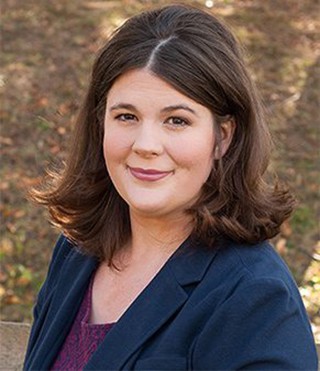



Your In-House Literary Agent
Hannah Brattesani spent years on the agenting side of the business before moving to Simon & Schuster—first at the Emma Sweeney Agency, then leading the foreign rights team at Folio Literary Management, and finally as a literary agent and Director of International Rights at The Friedrich Agency. Today she acquires and publishes adult fiction and nonfiction at Simon & Schuster, where she is also Backlist Manager for the flagship imprint. Originally from Edinburgh, Hannah graduated from the University of St Andrews, where she received the Douglas Dunn Award for Creative Writing.
To save time, use the buttons below or the quick nav menu button (to the left or at the bottom) to jump to the section you most want to read.
Give it to me fast
Tell me every last detail

Your The Book Incubator™ membership includes:
Live, Weekly Classes with Mary and Rufi:
Not webinar-style, not-workshop style (no peer-led discussion here). Original, practical lessons on craft and process topics that are way more useful than “show, don’t tell.” These are recorded and easily searchable if you can’t make it live.
Monthly Live Q&A Calls:
3 opportunities each month—one each with Mary, Rufi, and Greg—to troubleshoot your book face-to-face. If you can’t make it live, you can still submit a question.
1-on-1 Editorial Feedback:
12 structured opportunities to work with a top industry editor on your book at each stage: 5 brainstorming calls (while drafting), 6 line-level critiques of passages (while revising), and a full manuscript read. This series of 12 is more than enough for most people, but you can add more if needed.
Pitch & Query Support:
Once you write the book, you have to pitch it if you want a publisher. Work up your pitch and publishing strategy via 1-on-1 calls with Mary and Rufi, then perfect it with an included review by our in-house literary agent. Also included is a Synopsis review (we’ll tell you what that is and show you how to write it) with our Synopsis Editor, 2025 Kirkus Prize Winner Lucas Schaefer.
The Publication Room (“Pub Room”):
When you graduate, it isn’t goodbye. You have access to Pub Room, our quarterly meeting for alumni to help you navigate querying and publishing, until you don’t need it anymore.
Supports to KEEP YOU WRITING!
In addition to all of the above, we have supports to keep you going: a weekly milestone check-in to come announce your goal and celebrate your wins, a 24/7 co-write Zoom room, and a Concierge Team available to answer any questions you have, from how to find a link to the meaning of life.
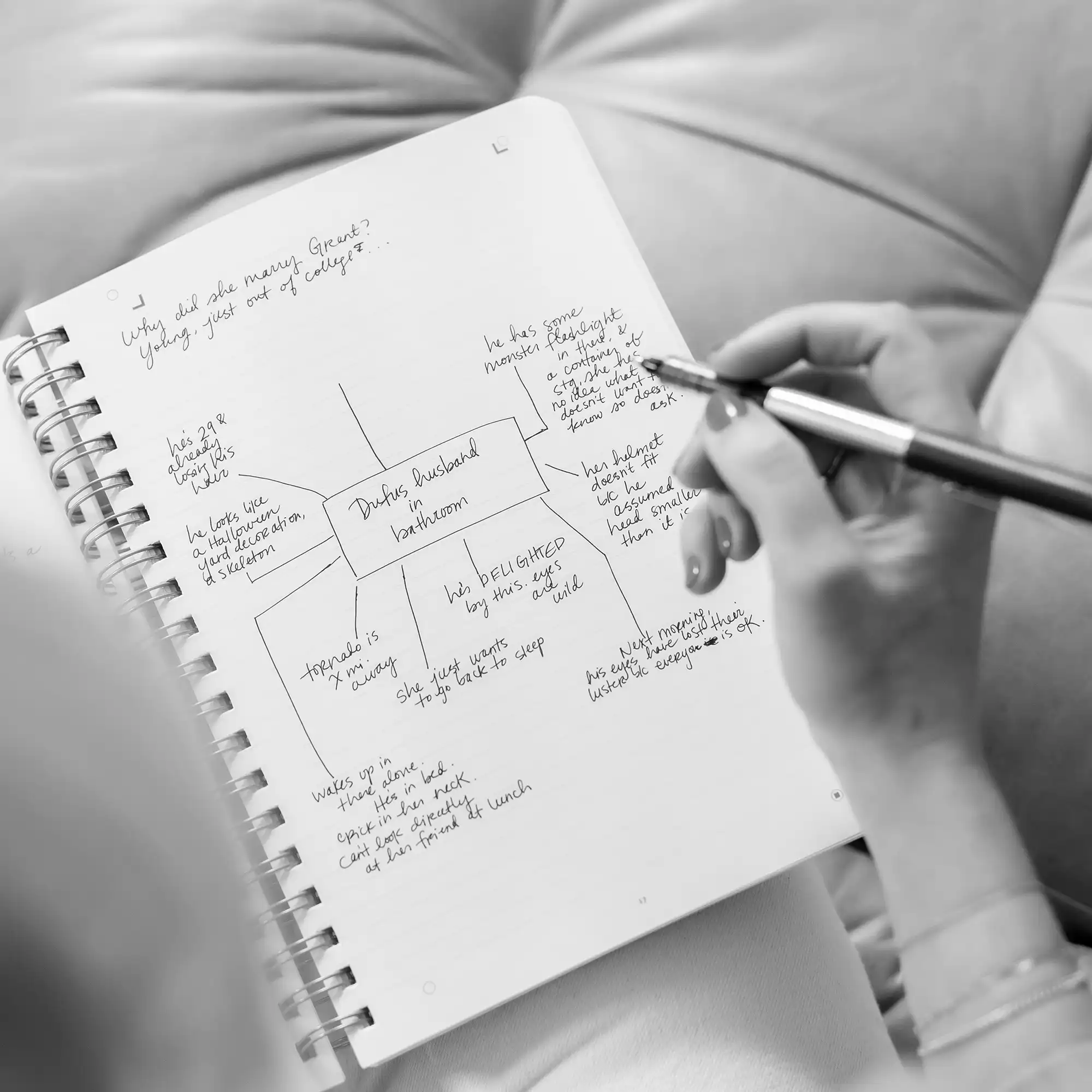
Your year of comprehensive, live support is designed to take as much time as you want to give it, whether that’s 10 minutes a week or 10 hours.
Here’s everything available to you—think of it like a candy store. You do not (and should not!) try to do it all. When you join, you'll have an onboarding meeting where we’ll help you figure out exactly where to plug in.
The Book Incubator™ has 6 Components:
Lots of extras to help you sit down and do the thing (there’s a reason 94% of our members finish their books in a year)

Not webinars. Not peer feedback. Not the same old writing advice.
Whatever you're stuck on—dialogue, first chapters, a saggy middle, revision overwhelm—Mary and Rufi teach it live, every week, and take your questions in real time.
Can't make it live? Every class is recorded and uploaded to a searchable platform, so you can jump straight to the exact teaching point you need—no digging through hours of video or wading through irrelevant content. (Want to see what it looks like inside? Go here.)

No peer feedback here. We don’t teach flying a plane by sticking a bunch of aspiring pilots in a room together so they can swap guesses on how to land the damn thing.
We’ve built our editorial support around what we've discovered writers and books actually need.
We find that these 12 opportunities are more than enough for most writers, so this is what’s included—but if you need more, you can add them for an additional fee once inside.
Stage
What you get
Why
Drafting
5 one-on-one calls with an editor to talk through your ideas
Early on, getting feedback on pages isn't useful. In fact, it can be derailing. The story doesn't know what it is yet. But brainstorming with an editor can make the difference between a great first draft and a mediocre one.
Critiquing
6 submissions (up to 2,500 words each) for in-depth, line-level feedback—plus a personal video-walkthrough of the notes
You were accepted to The Book Incubator because you can write. You don't need someone to approve every line of your manuscript. But everyone has specific questions come up, and that's what Critiques are for. (Sometimes you just need someone tell you to keep going!)
Full Manuscript Read
A full-manuscript read, culminating in an editorial letter like the kind authors get from traditional publishing houses, followed by a 1:1 meeting with the editor
We call this the “Pitch Readiness Read,” and it’s to give you peace of mind before you query. An editor will flag the specific things you should address before sending out your manuscript, so you can pitch with confidence.

Once your manuscript is ready, we help you get it in front of agents:
1:1 calls with Mary and Rufi to work up your pitch (one each included)
Pitch review and refinement from Hannah Brattesani, our in-house literary agent (with an optional full query review as an add-on)
Synopsis review from Lucas Schaefer (a step most programs skip entirely, even though most literary agents now require one)
Once you’re in The Book Incubator™, you’re in our community for life.
We don’t accept you as an applicant only to abandon you when your year ends—once you’re in, you’re in. It’s like Fight Club (and if you get that reference, you’ll feel right at home in this demographic).
We’re going to stick with you until you find an agent or book deal—and hard truth is that sometimes that takes a while. While we can’t land you an agent or book deal (and anyone who promises that is misleading you—no one can do that, it’s a bait and switch), what we can do is set you up for success and help you navigate the publishing world. You’ll get access to our quarterly Publication Room meeting, where we answer your questions about querying and publishing like:
Why am I getting rejections?
Is my letter still working?
Is this a weird small press or does it look legit?
What’s normal for a publishing contract?
How do I identify a publishing scam?


We want you to keep writing no matter what, and so in addition to all of the above, we have supports to keep you going:
Monday Milestone check-in (come announce your goals and celebrate your wins each week!)
A 24/7 co-writing Zoom room
A dedicated memoir cohort for memoir writers
A Concierge Team available to answer any questions you have, from how to find a link to the meaning of life. Aren’t they cute?


Feeling like a lot? When you join, you'll have an onboarding meeting with our Concierge Team, who will help you figure out exactly where to plug in.

Real Talk: The Book Incubator™ is a big investment.
But for the serious writer, it will ultimately save you money (and, more importantly, time).
Costs you are saving by joining The Book Incubator™:
Random writing classes: $7,000+
At an average of $350+ a pop for a 6-week course, taking 4 of these comes to $1,400 yearly (only a season’s worth of instruction, for that matter). Most writers spend 4-5 years hobbling together classes until they’ve finished a book. That’s 24 classes, or $7,000+, over half a decade to complete one book.
Hiring a developmental editor: $4,000+
A good developmental editor costs at least .04 a word. For a 95,000 word manuscript (an average length), that’s going to be around four grand.
An MFA: $85,000+
This estimate is a little low—a Columbia University MFA is currently $146,480. (And many MFA grads haven’t finished a book—we know, because many of them have joined this program!)
Someone to help you find an agent: $2,000+
Getting a literary agent is an insider’s process: you have to know the rules to do it the right way. Otherwise, you’re wasting your time. Hiring someone to help you in the way that we do inside The Book Incubator™ will cost you around $2,000.
3 payments of $4,100
OR
$3,650 once + 11 payments of $850
One time payment of $12,300
Save $700 when you pay in full
15 payments of $920
Special offer for a limited time
A note on our fee: Our pricing is what it is because we compensate our team as the professionals they are—not as volunteers, not as a rotating cast of overworked contractors in the arts. When you enroll, you get the same caliber of editorial guidance that traditionally published authors get from their own publishing houses.

We will help you find a process that works with the life you have, not the life someone else has.
We want you to write your book. Not get an “A” in The Book Incubator, or find new people to play Mah Jong with.
So, we’ve designed this program so that you can make of it what you want.
Got zero free time? No problem—the base curriculum is composed of 10-minute lessons because, when creating it, Mary was coming from a decade as a curriculum designer for a education company and knew that half of teaching is showing people what they don’t have to do.
When it comes to the rest of the teaching content, our highly searchable platform will allow you to find anything you’re looking for and be watching a particular teaching moment about it in under 2 seconds. Literally:
Or maybe you want to join us live every week—GREAT! We have live lessons each week, plus other support meetings if that’s your thing.
The rest is scheduled on your own time, to suit your schedule:
1-on-1 editorial meetings
Critiques for feedback
1-on-1 calls with Mary and Rufi
Ultimately, our goal is to help you write your book, and make it your best possible book. We know from experience that this does not require you to surrender your tennis Tuesdays or kids’ soccer games to us. We will help you find a process that works with the life you have, not the life someone else has.
And it works. There’s a reason 94% of our members finish their books, even though the vast majority have jobs and kids…you don’t actually need hours a day to write a (good) book.

Here are some sample writing schedules from actual writers we’ve worked with:
Parent with full-time job
Teacher with summers off
WRITES (OR REVISES): Writes 4 hrs/week on average (2 early mornings, and 2 hours on weekends)
WRITES (OR REVISES): Writes or revises 15-20 hours per week during summer and 4-5 hours per week during school year
DOES COURSEWORK: Consumes recorded and live content during other tasks (laundry) and schedules 1:1s and editorials during breaks and in car line
DOES COURSEWORK: Joins lives calls during lunch breaks and attends co-writes for accountability
TIMELINE: Writing 500-1,500 words/hour, can complete full draft in 3-8 months
TIMELINE: Can finish a draft in 2 months during the summer or 5 months during the school year
DRAFT DONE IN 3-8 MONTHS
DRAFT DONE IN 2-5 MONTHS



Our Company Values
You are a writer if you write
Even if you don’t yet identify as one, in this program, you are. We don’t think of you or refer to you as a student, or an “aspiring: writer. You’re writing, so you’re a writer—and no one can tell you you aren’t.
Writing can be taught
Demystifying the process is not a compromise of the art. The idea that writing is an opaque gift you either have or don’t is exactly what keeps most people out of it.
A full life is not an obstacle to writing a good book—it’s an asset.
The writers who have to carve out time to write because they’re busy living their lives—taking care of kids and parents, working in law or academia or healthcare—are the people who should be writing novels. A layered life shouldn’t prevent certain stories from ever making it to the page. We want to read the books that only get written if the program fits around a life that’s already full, so that’s what we built.
There is no hierarchy of genre
Chekhov, Colleen Hoover, and Save the Cat can turn up in the same lesson here, because we don’t relegate plot or genre-writing to the bottom tier of literary prestige. Whatever kind of animal your book is, our job is to help you make it the best possible version of itself.
People should be paid well for good work
Our pricing is what it is because we compensate our team as the professionals they are—not as volunteers, not as a rotating cast of overworked contractors in the arts. What you get in return is the caliber of editorial guidance traditionally published authors get from their own publishing houses.
The place for AI isn’t writing your book for you
If you want to write your book using AI, you don’t need to invest in this program anyway!
Rudeness is disqualifying
We have zero tolerance for rudeness, hostility, or disrespect toward our team or your fellow writers, anywhere in this community. Violations end your membership immediately.

This program is for you if:
You don't want to be miserable or over-burdened by unnecessary to-dos
You want guidance from people who've done it, minus the absolutism and condescension
You have a story to tell but know you still have things to learn
You don't have time to edit other people's work but do want a trustworthy editor
You're tired of writing classes that burn you out without moving your book forward
This program is NOT for you if:
You want someone to write your book for you, or to "make you write it"
You think that if you pay a lot for something, you get to be rude
You are committed to using AI to generate writing for your book